


1
/
of
1
HN05 Desktop Fentanyl Smart Storage Cabinet with RFID Tracking
HN05 Desktop Fentanyl Smart Storage Cabinet with RFID Tracking
Regular price
Rs. 0.00
Regular price
Sale price
Rs. 0.00
Shipping calculated at checkout.
Compact RFID-controlled narcotics storage for nurse stations, anaesthesia preparation areas, pharmacies and outpatient departments.
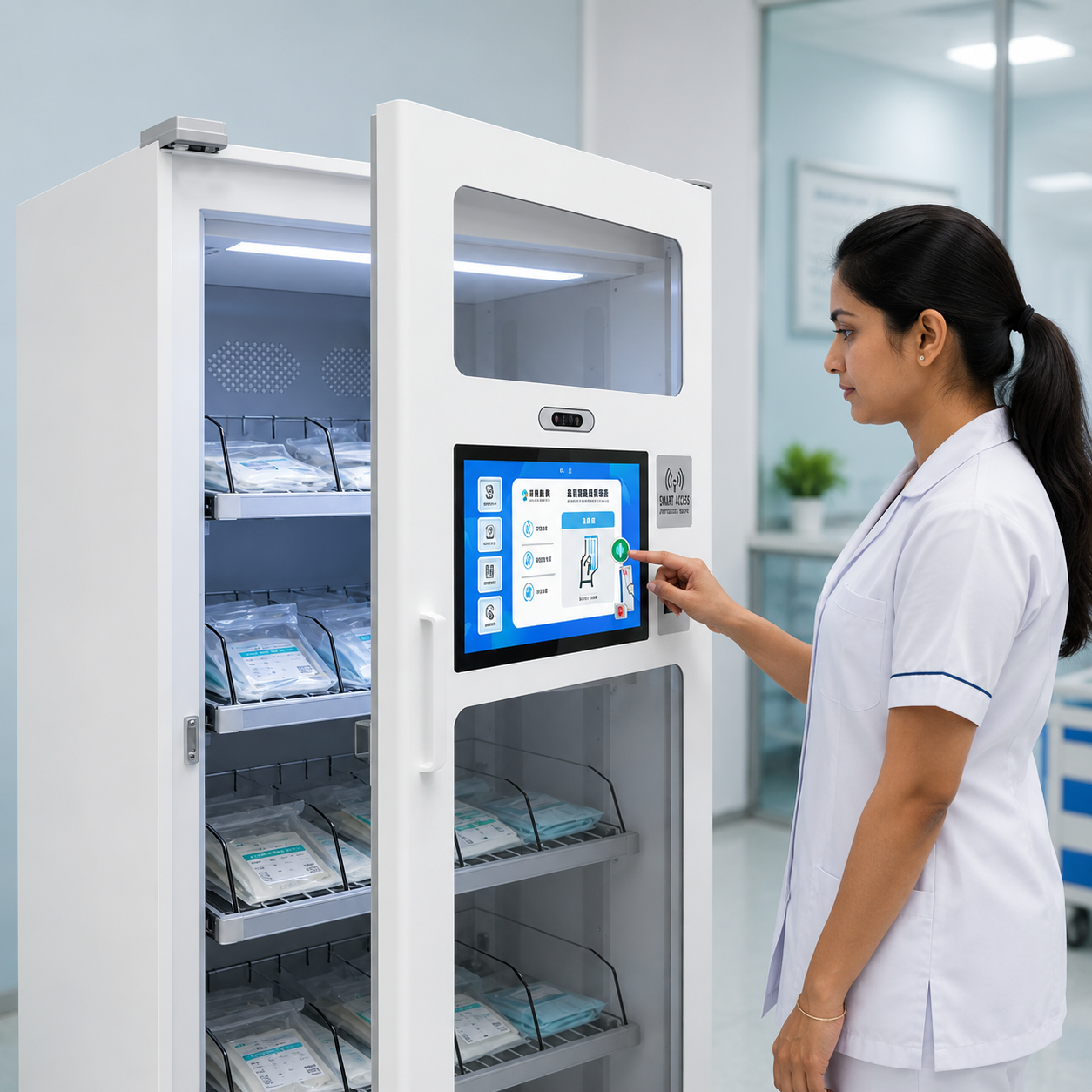
The RIFE HN05 is a compact desktop smart cabinet designed for the controlled storage, dispensing and reconciliation of fentanyl, narcotics and other high-security medicines.
Every tagged vial is automatically detected through drawer-level UHF RFID antennas. The system records the identity of the user, the medicine removed, the time of removal and the corresponding transaction details, helping hospitals maintain a complete electronic chain of custody.
With four RFID-enabled drawers, a 21.5-inch touchscreen and capacity for more than 1,500 vials, the HN05 is suitable for departments that need secure medicine control without installing a large floor-standing cabinet.
- 1,500+ vial capacity
- 4 individually monitored drawers
- 99.9% stated RFID reading accuracy
- Automatic electronic audit trail
- Biometric and card-based access
- Wi-Fi, 4G and LAN connectivity
Product Overview
The HN05 provides a compact point-of-use controlled-drug management system for hospital departments. Unlike a conventional locked drug cupboard, the cabinet combines electronic authentication, RFID inventory monitoring, controlled drawer access, transaction recording and central reporting.
When a medicine vial is placed inside the cabinet, the RFID system detects its unique tag and adds it to the live inventory. During dispensing, only the authorised drawer is released. Removal of the vial is detected automatically and the inventory record is updated without requiring a handwritten stock entry.
Key Features
RFID-based vial identification
Each vial can be assigned a passive UHF RFID tag containing or referencing: unique medicine identity, drug name, strength or concentration, batch number, expiry date, serial or inventory number, and storage transaction history.
One RFID antenna per drawer
Each of the four drawers has its own antenna, creating a defined RFID reading zone for more consistent detection inside a metal cabinet.
Automatic inventory updates
The cabinet records vials placed inside, vials removed, date and time of movement, authorised user, associated drawer, current stock balance, and batch and expiry information.
Controlled access
Access can be provided through face recognition, fingerprint verification, RFID or IC staff card, PIN, dual-user verification, or multi-factor authentication.
Transaction video recording
The integrated camera system supports operator identification, recording while a drawer is open, transaction-linked video evidence, cabinet-area security monitoring, and tamper-event recording.
Expiry and stock alerts
The management platform generates alerts for near-expiry medicines, expired medicines, minimum stock level, unexplained stock differences, overdue reconciliation, unauthorised access attempts, forced drawer opening, and cabinet communication failure.
How the HN05 System Works
- Medicine registration — The pharmacist registers each vial and assigns an RFID tag with medicine name, batch, concentration and expiry details.
- Automatic cabinet intake — When the vial is placed inside a drawer, the antenna detects the RFID tag and updates the cabinet inventory.
- User authentication — An authorised staff member authenticates using face recognition, fingerprint, staff card or PIN. Dual-user verification is available for high-security workflows.
- Prescription or issue verification — Where integrated with the hospital system, the cabinet checks the selected medicine against the authorised issue request or prescription.
- Controlled drawer opening — Only the relevant drawer is unlocked.
- Automatic removal detection — The RFID system detects the vial leaving the drawer and updates the inventory record.
- Return or residue recording — Unused medicines, empty ampoules or residual contents are processed through the hospital's configured return and wastage workflow.
- Electronic audit reporting — The transaction is transferred to the central management system for reconciliation and reporting.
Technical Specifications
| Specification | HN05 |
|---|---|
| Installation | Tabletop or desktop |
| Overall dimensions | 500 W × 510 D × 991 H mm |
| Number of drawers | 4 |
| Stated vial capacity | 1,500+ vials |
| RFID antennas | 4, one per drawer |
| RFID technology | Passive UHF RFID |
| RFID frequency | 860–960 MHz |
| Stated RFID accuracy | 99.9% |
| Display | 21.5-inch multi-touchscreen |
| Network connectivity | Wi-Fi, 4G and wired LAN |
| Power backup | UPS-supported configuration |
| Access options | Face, fingerprint, staff card and PIN |
| Camera | Transaction and security camera |
| Reporting | Centralised electronic audit trail |
| Integration | HIS, EMR or pharmacy system, subject to interface scope |
Recommended Applications
- Nurse stations
- Anaesthesiology preparation rooms
- Day-care surgery departments
- Dispensing pharmacies
- Outpatient clinics
- Pain-management clinics
- Procedure rooms
- Small operating theatre complexes
Product Highlights
- Compact footprint: Designed for placement on an existing counter or medication-preparation bench.
- Point-of-use control: Keeps controlled drugs closer to the clinical team while maintaining electronic access and inventory records.
- Automatic reconciliation: RFID reduces dependence on repeated manual vial counting.
- Department-level deployment: Multiple HN05 cabinets can be managed through one central platform.
Share
Subscribe to our emails
Be the first to know about new collections and exclusive offers.