


1
/
of
3
Rife OCB – Clinical Task Chair with Winged Back Support
Rife OCB – Clinical Task Chair with Winged Back Support
Regular price
Rs. 15,000.00
Regular price
Sale price
Rs. 15,000.00
Shipping calculated at checkout.
Rife OCB – Clinical Task Chair with Winged Back Support
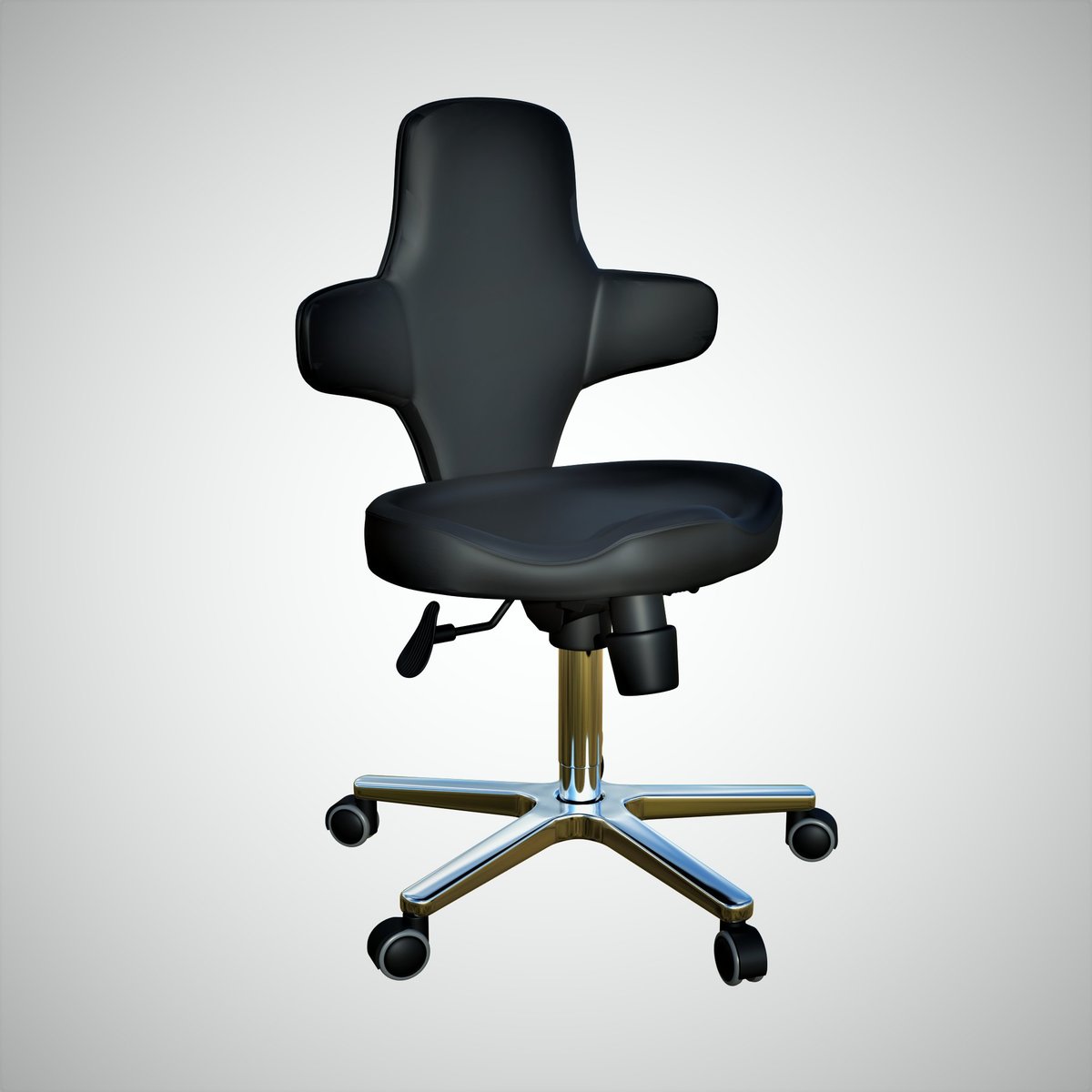
A purpose-built clinical task chair with a waterfall-edge seat, torso-shaped winged backrest and compact chrome base — designed for the documentation, charting, reception and administrative work that fills a significant portion of every clinical professional’s day.
Not every clinical task calls for a saddle stool
The saddle stools in the Rife range are the right choice for active procedural work — close-access clinical tasks, treatment delivery, lab bench work. But clinical environments also include substantial periods of lower-intensity seated work: charting at a ward station, reviewing results at a diagnostic workstation, reception duties, team briefings, administrative documentation. These tasks share different demands — sustained moderate-duration sitting, keyboard and screen work, mixed posture between upright and slightly reclined.
For this category of work, a compact, ergonomically designed conventional task chair outperforms a saddle stool. The OCB is built for exactly this context: a chair that brings genuine clinical ergonomics to the parts of the working day that don’t involve active procedures.
Why clinical environments need more than a generic office chair
Most hospital charting stations and clinical reception areas are equipped with whatever standard office chair was available at the time of fitout. The result is typically a large executive chair that takes up too much space, a basic mesh chair with no meaningful lumbar support, or a worn stool that has outlived its original specification. None of these are designed for the specific ergonomic demands of clinical administrative work.
Clinical administrative seating has specific requirements that generic office furniture doesn’t address:
- Compact footprint: Clinical workstations are frequently space-constrained. A compact R300 mm base moves under desks and around ward furniture without obstruction.
- Height range covering clinical desk heights: Clinical charting stations and nursing desks are often set higher than standard office desks. A 100 mm BIFMA-rated gas lift provides the height range to match.
- Wipe-clean surfaces: Infection control requirements in clinical environments mean upholstered surfaces must be cleanable. Standard mesh or fabric office chairs are incompatible with standard clinical cleaning protocols.
- Durability under multi-shift, multi-user use: Clinical chairs are used across shifts by different staff. They need to be built to commercial durability standards, not residential or light-commercial office specifications.
- Back support suited to mixed-posture work: Clinical admin staff move between keyboard work, screen review, patient communication and documentation — requiring a backrest that accommodates a range of trunk positions rather than locking one in.
❌ Generic office chair at a clinical station
- Oversized base obstructs tight clinical workstations
- Fabric or mesh cannot be wiped with clinical disinfectants
- Lumbar support fixed — doesn’t adapt to posture changes
- Gas lift not rated for commercial multi-shift use
- Not designed for clinical desk height ranges
✅ Rife OCB at a clinical station
- Compact R300 mm base — fits tight ward and reception layouts
- Wipe-clean PU upholstery — compatible with clinical cleaning
- Winged back supports varied trunk positions throughout the shift
- BIFMA-rated gas lift built for commercial multi-shift use
- 100 mm lift range covers clinical desk height variation
The waterfall-edge seat: pressure and circulation
The OCB uses a circular seat with a waterfall (rounded) front edge. This design choice directly addresses one of the most common ergonomic problems with flat-edge seats in clinical settings: sustained thigh compression.
When a conventional square-edge seat presses against the underside of the thighs, it compresses the femoral vessels and peroneal nerves running along the back of the legs. Over a 2–3 hour charting session, this produces the familiar sensations of leg heaviness, foot tingling, and lower limb fatigue — all of which impair concentration and increase the urge to stand and move.
The waterfall edge eliminates the sharp pressure point by curving downward at the front, distributing contact pressure across a larger surface area and reducing the compressive load on the femoral vessels. The practical result is better leg circulation, less lower limb fatigue, and improved comfort during extended documentation sessions.
The winged backrest: support for mixed-posture work
The OCB’s torso-shaped backrest with side wings is designed for the mixed-posture reality of clinical administrative work. Unlike a single-plane backrest that supports one fixed trunk position, the wing profile accommodates the natural variation in how clinical staff sit across a shift:
- Upright keyboard work: The central backrest panel provides lumbar and thoracic support in an active upright position during data entry and charting.
- Screen review: A slight recline into the backrest reduces the static load on the spinal extensors during periods of reading and reviewing results.
- Patient communication: The wing profile allows the user to rotate slightly and lean toward a patient or colleague without losing back contact.
- Elbow resting: The wing extensions provide a lateral support surface that some users find useful for brief elbow resting during phone calls or team interactions — reducing sustained shoulder elevation.
This versatility is what makes the OCB suitable for the mixed, unpredictable rhythm of clinical administrative work — very different from the sustained, single-posture demand of a standard office desk job.
The compact base: designed for clinical floor plans
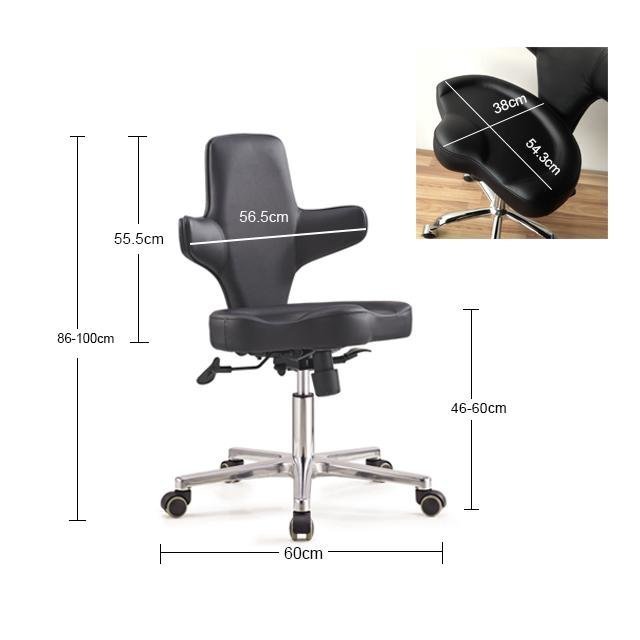
The R300 mm chrome base is deliberately smaller than the R500–550 mm base found on standard executive and ergonomic office chairs. This matters in clinical environments where workstation footprints are tightly planned and where chairs need to tuck fully under desks, move between stations, and avoid obstructing clinical workflow corridors.
The 100 mm BIFMA-rated chrome gas lift provides a height range suited to clinical desk heights, which frequently run higher than the 720–740 mm standard office desk height. BIFMA certification means the gas lift mechanism is independently tested to commercial durability standards — relevant for chairs used across multiple shifts by different staff members over a multi-year lifecycle.
Key features
Waterfall-edge circular seatRounded front edge reduces femoral vessel compression and lower limb fatigue during extended documentation sessions.
Torso-shaped winged backrestAccommodates upright work, screen review, patient communication and brief elbow resting across a full clinical shift.
Compact R300 mm chrome baseSmaller than standard office chair bases — fits tight clinical workstation footprints without obstruction.
BIFMA-rated 100 mm gas liftCommercially rated height adjustment for multi-shift, multi-user clinical environments.
Wipe-clean PU upholsteryCompatible with standard clinical disinfection protocols. Suitable for infection-controlled environments.
Castor mobilitySmooth-rolling castors for repositioning between workstations without lifting.
Specifications
| Model | OCB |
|---|---|
| Seat type | Circular waterfall-edge task seat |
| Backrest | Torso-shaped winged back support |
| Gas lift | 100 mm chrome, BIFMA-rated |
| Base | Compact R300 mm chrome with castors |
| Upholstery | Wipe-clean PU, clinical-grade |
| Primary use | Hospital charting, reception, clinical admin, diagnostic workstations, research labs |
Recommended for
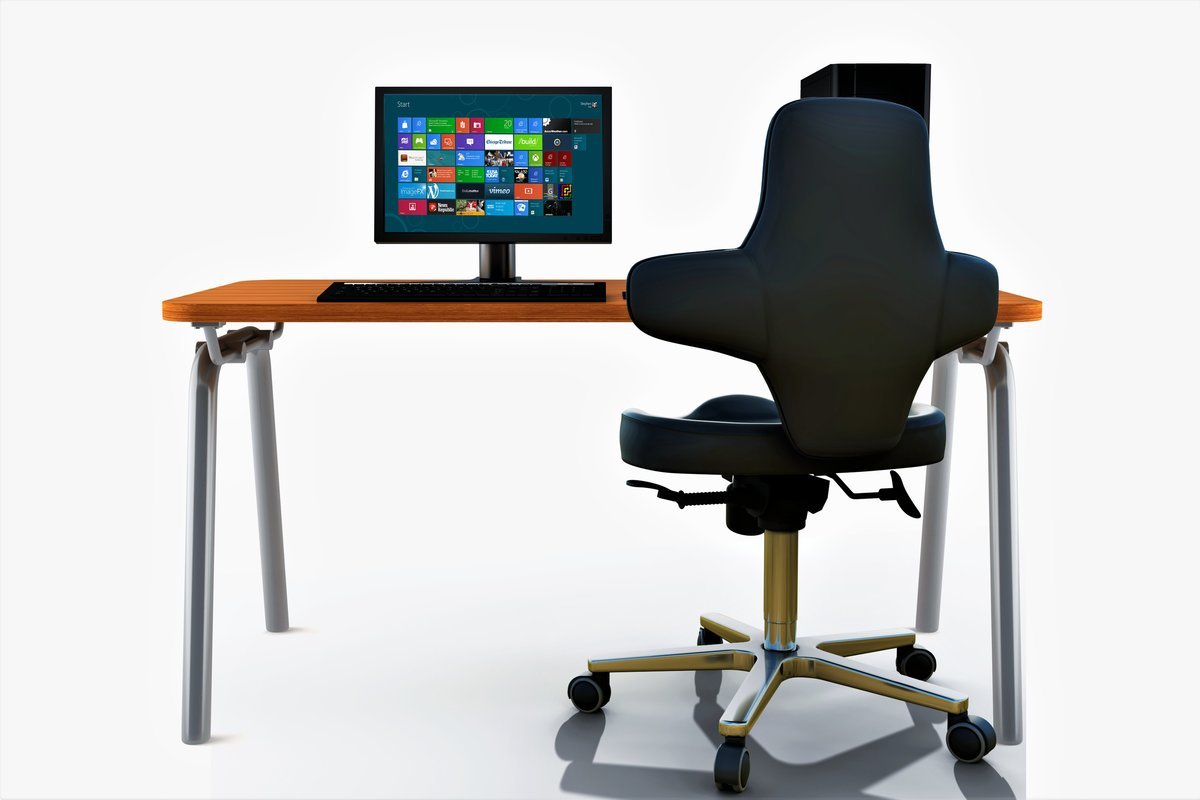
- Nursing station and ward charting: Where staff alternate between documentation, patient communication and screen review across multi-hour shifts.
- Hospital reception and administrative areas: Where a compact, cleanable, professional-grade chair is required in a space-constrained layout.
- Clinical research laboratories: Data entry, results review and documentation at lab workstations.
- Diagnostic imaging and reporting rooms: Extended screen-based reporting where a task chair with back support is preferred over a stool.
- Shared clinical offices and meeting rooms: Multi-user environments where a clean, durable, adjustable task chair is the right specification.
How the OCB fits into the Rife seating range
The Rife range is designed to cover the full spectrum of clinical seating needs. The saddle stools (RSL, RSB, R400, Tilt Light) are the right choice for active procedural work requiring mobility and ergonomic forward posture. The OCB fills a distinct, complementary role — it is the task chair for the administrative and documentation work that brackets and supports that procedural work throughout the clinical day.
Many clinical facilities benefit from specifying both: saddle stools at procedure and treatment stations, and OCBs at charting, reception and documentation workstations. The two product families use compatible visual and material languages, so they sit well together in a single clinical environment.
Frequently asked questions
Is the OCB a saddle chair?
No. The OCB is a conventional task chair with a flat waterfall-edge seat and winged backrest. It is designed for clinical administrative and charting work, not for active procedural use. For saddle seating options, see the Rife RSL, RSB, R400 and Saddle Tilt Light.
What makes this different from a standard office chair?
Three things: the compact R300 mm base fits clinical workstation footprints that standard office chairs obstruct; the wipe-clean PU upholstery is compatible with clinical disinfection protocols that fabric and mesh chairs are not; and the BIFMA-rated gas lift is specified for commercial multi-shift use rather than residential or light-office durability.
Can it be used at a standing-height clinical desk?
The 100 mm gas lift range accommodates most clinical desk height variations. For very high workstations or sit-stand desks, confirm the required seat height range with the RIFE team before ordering.
Is it suitable for bariatric use?
Weight capacity is available on request. Contact the RIFE Medical team with your specification requirements.
Specify the OCB for your clinical facility
Contact the RIFE Medical team with your workstation type, number of units, height requirements and any specific configuration needs. We supply to hospitals, diagnostic centres, clinical research facilities and medical office environments across India.
Request a Quote Call +91 98992 50704Selection guide: Compare requirements and related configurations in the Rife OCB Clinical Task Chair Buying Guide.
Share
Subscribe to our emails
Be the first to know about new collections and exclusive offers.


