
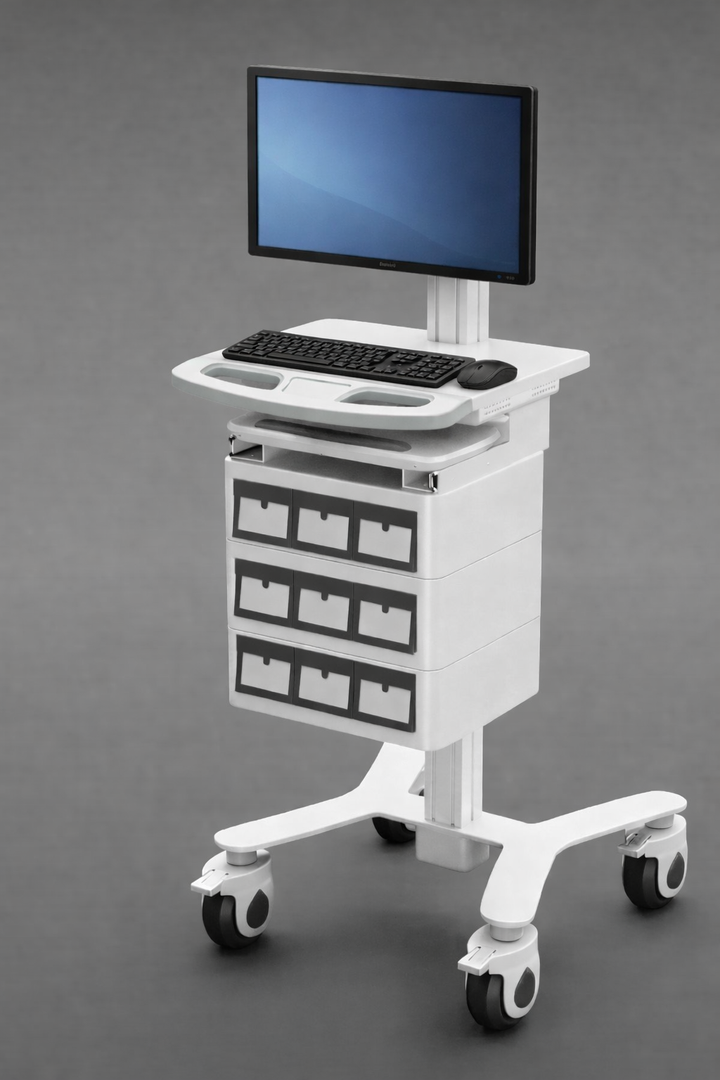
HSM-11 Workstation on Wheels
A powered or IT-equipped mobile-workstation category for maintenance planning.
View product →
Build a practical sensor-data pilot that supports biomedical engineering without creating unmanageable false alarms.
Discuss connected equipmentPredictive maintenance estimates developing faults from condition and usage data. It differs from preventive maintenance, which follows a schedule, and reactive maintenance, which begins after failure. Start only where failure consequences and available data justify the additional complexity.
Battery voltage, temperature and charge cycles may support battery-health assessment. Motor current can indicate changing lock behaviour. Temperature and vibration can reveal abnormal equipment patterns. Sensors should be selected from an engineering hypothesis—not installed simply because data is available.
Begin with condition thresholds and anomaly detection before relying on remaining-useful-life predictions. Every alert needs severity, owner, evidence, recommended inspection and closure feedback. Integrate with the CMMS only after the pilot demonstrates useful precision.
Decide whether processing occurs on the device, an on-premise gateway or a cloud platform. Apply network segmentation, device identity, encryption, update control, retention rules and supplier-access governance.
A powered or IT-equipped mobile-workstation category for maintenance planning.
View product →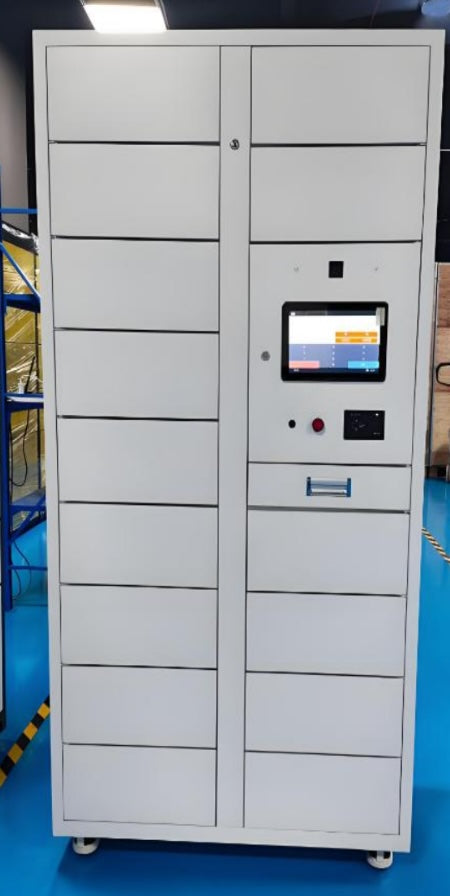
A connected cabinet category with electronic components and event data.
View product →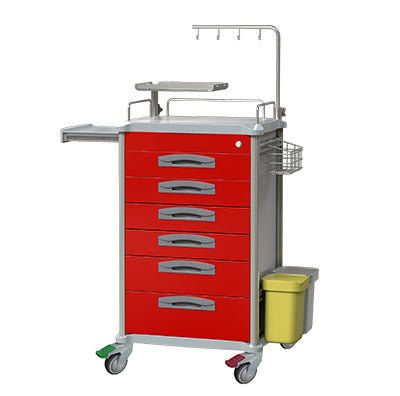
Consider condition monitoring only where configured equipment justifies it.
View product →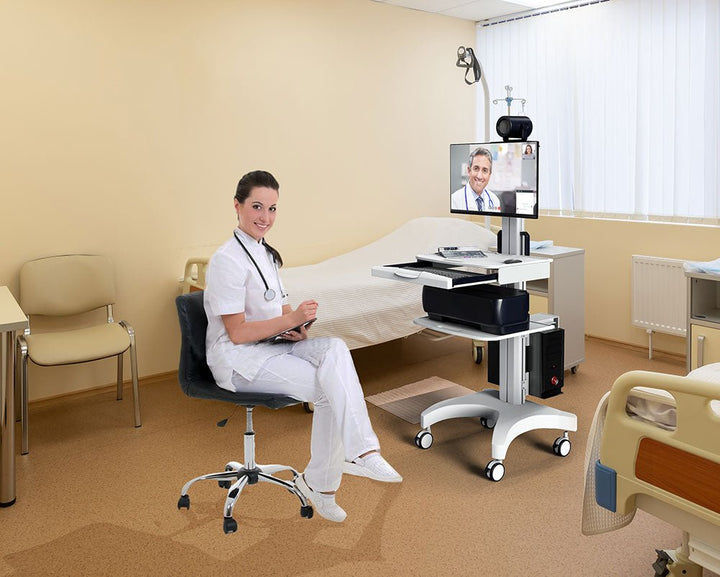
A technology-carrying cart where power and device availability may be operationally important.
View product →Only if measurable changes correlate reliably with that failure and enough labelled history exists. Begin with inspection-supported condition monitoring.
Some can, but the sensor, power, attachment, cleaning and maintenance burden must be justified for each asset class.
There is no universal target. Evaluate false alarms, missed failures, lead time and the operational cost of each outcome.
No. Edge, on-premise and hybrid architectures are possible, subject to the platform and hospital requirements.
It depends on failure frequency and model complexity. Useful threshold alerts may begin earlier than reliable life prediction.
Yes when compatible interfaces exist, but automatic creation should follow pilot validation and include human review for uncertain alerts.
Rife Medical can discuss sensor-ready cart and cabinet requirements for a controlled pilot.
Request consultationWe are on hand to quickly give you pricing, more information, or help choose the right medical furniture, cart, cabinet, or storage solution for your requirement.