Modular Style Medical Carts
Modern healthcare environments require adaptable equipment that supports evolving clinical workflows. The Modular Style Medical Carts collection is designed to bring flexibility, mobility, and organization into patient care areas, outpatient settings, diagnostic rooms, and treatment zones. Built around a modular design philosophy, these carts allow healthcare professionals to configure their workspace according to operational needs while maintaining a clean and professional appearance.
This collection includes a variety of cart styles, from compact laptop workstations to advanced diagnostic platforms with integrated storage solutions. Each design focuses on improving accessibility, reducing workspace clutter, and enabling smooth digital workflows in fast-paced clinical environments. The carts highlighted in the catalogue demonstrate how modular construction supports different use cases such as bedside documentation, dental imaging, ultrasound review, medication storage, and general hospital administration.
Designed for Modern Healthcare Workflows
Healthcare spaces demand equipment that adapts to changing patient requirements and technological integration. Modular medical carts provide a versatile solution by combining structured organization with mobile functionality. The collection features carts with monitor mounts, keyboard trays, accessory shelves, drawers, and dedicated compartments that help maintain workflow efficiency while ensuring quick access to essential tools.
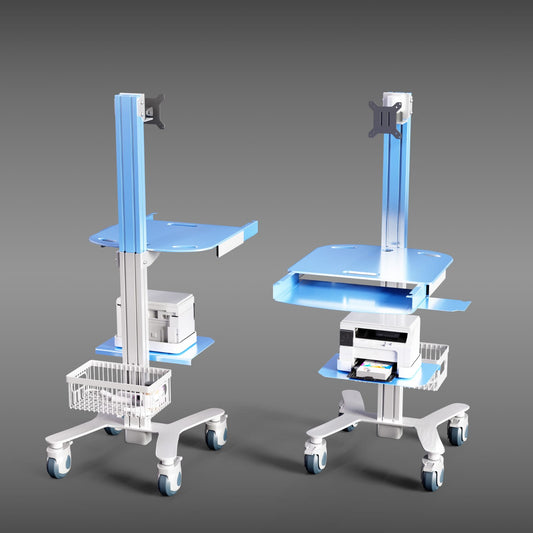
Several models in the catalogue emphasize compact footprints that allow movement through tight corridors or crowded clinical rooms. For example, compact laptop carts shown on page 1 are designed for bedside documentation and telemedicine activities, offering a streamlined structure that supports digital healthcare processes. Their modular nature ensures that different accessories or storage components can be arranged to match specific operational needs.
Modular Construction for Flexible Use
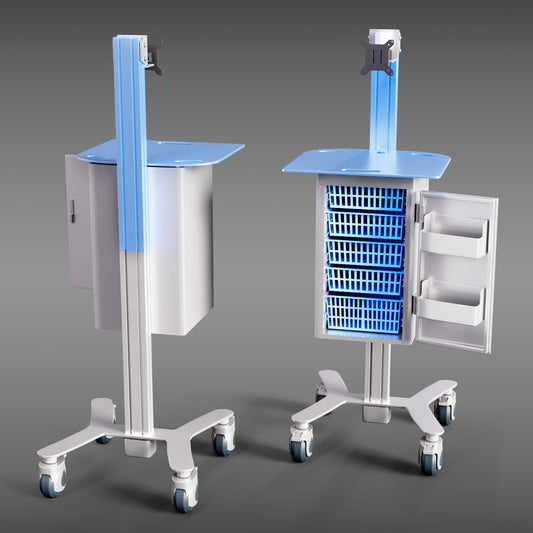
The defining feature of this collection is modularity. Instead of fixed, one-purpose designs, these carts allow multiple configurations that suit various clinical departments. Some units focus on technology integration with stable platforms for monitors and printers, while others prioritize storage with multiple trays or drawers for medication and instruments.
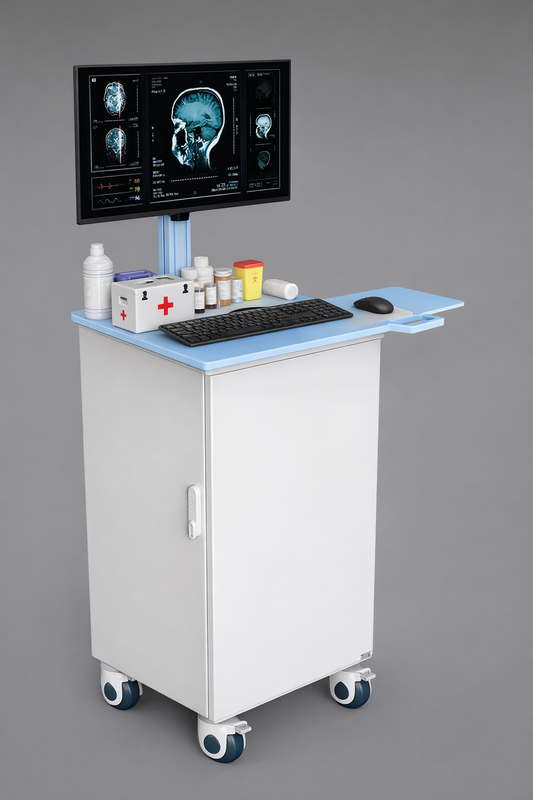
A diagnostic workstation displayed on page 3 highlights a stable platform for imaging equipment, enabling clinicians to perform accurate assessments while maintaining organized cable management. In contrast, storage-focused carts presented on page 5 emphasize tray systems that help categorize medical supplies efficiently. This variety demonstrates how modular styling supports both digital and physical workflow requirements within healthcare settings.
Mobility and Ergonomic Design
Mobility plays a critical role in healthcare operations. The carts in this collection are designed with smooth-rolling wheels that support easy maneuverability across different departments. Many models incorporate silent casters to reduce noise disruption in patient areas, ensuring a calm and professional environment.
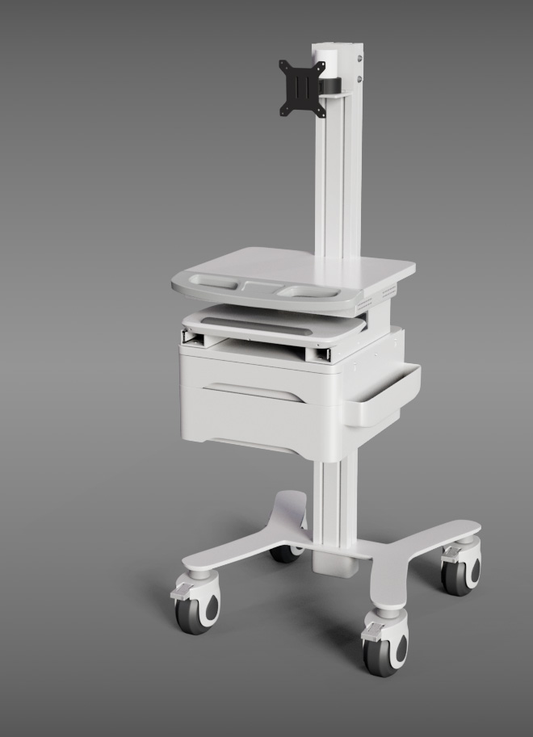
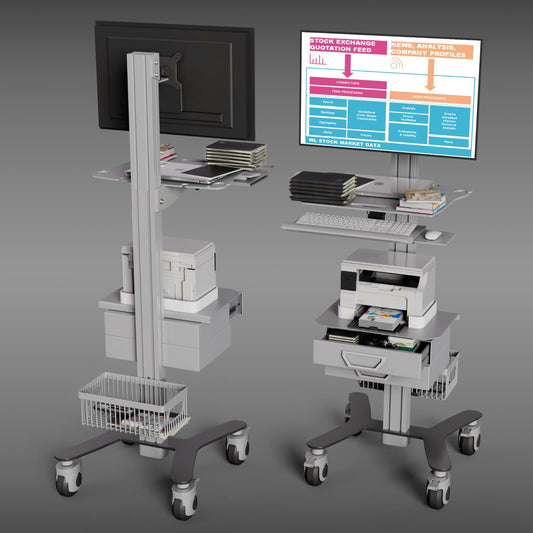
Ergonomic considerations are also central to the modular design approach. Adjustable monitor mounts, separate keyboard and mouse trays, and multi-level platforms allow healthcare professionals to maintain comfortable working postures throughout long shifts. Page 2 of the catalogue illustrates carts with separate accessory shelves and organized tray layouts that help keep work surfaces clutter-free while improving workflow efficiency.
Integrated Technology Support
As healthcare becomes increasingly digital, medical carts must support a range of devices including monitors, printers, scanners, and CPUs. The modular style allows seamless integration of technology without compromising stability. Dedicated shelves and mounting options ensure that devices remain secure during movement while still being easily accessible.
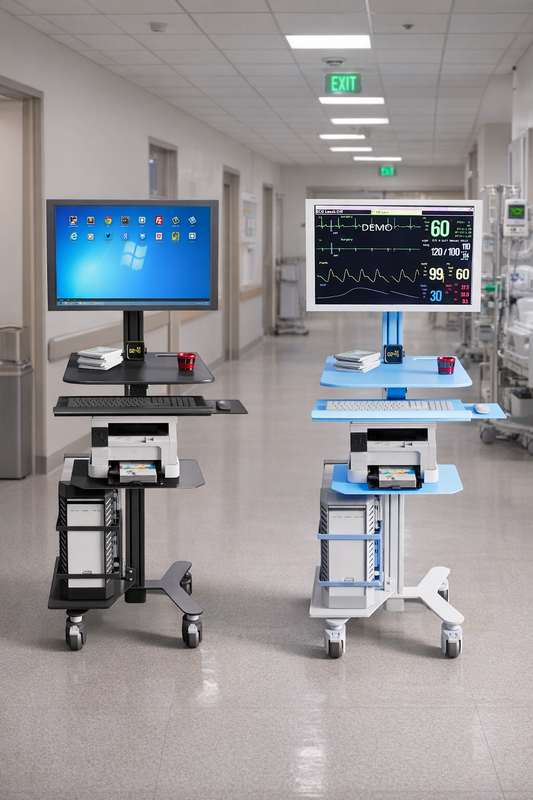
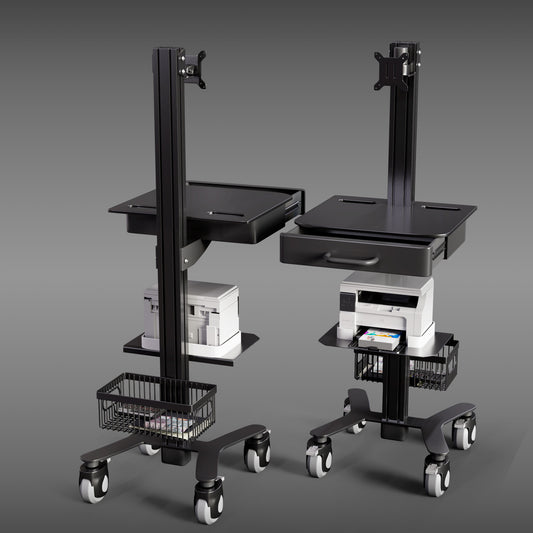
Some carts in the collection include integrated printing workflows and multi-level platforms, enabling users to manage documentation and digital imaging simultaneously. These configurations are particularly useful in diagnostic environments, as shown on page 8, where stable platforms and organized compartments enhance daily operational efficiency.
Storage and Organization Features
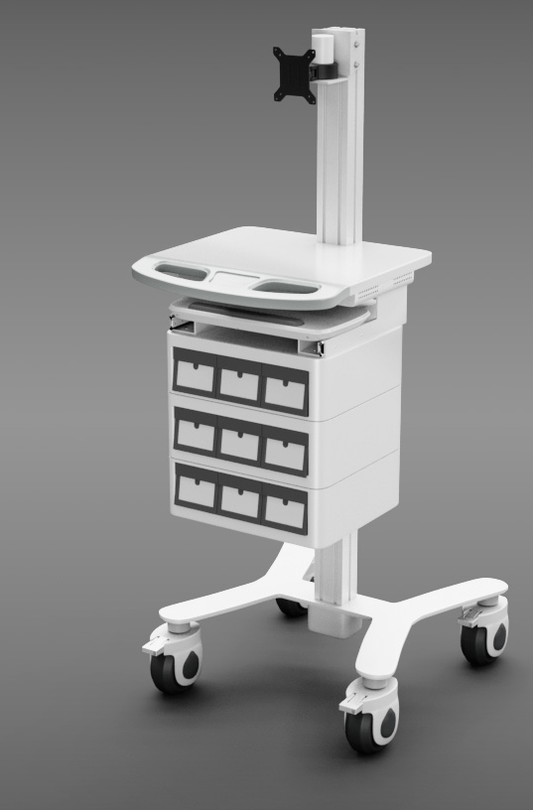
Efficient storage is essential for maintaining a structured clinical environment. The Modular Style Medical Carts collection includes designs with drawers, bins, buckets, and tray systems that support organized storage of supplies and accessories. Multi-drawer carts shown later in the catalogue demonstrate how modular storage solutions can help streamline medication management and procedural workflows.
By separating tools into dedicated compartments, healthcare staff can locate items quickly, reducing delays during patient care. This organized approach not only improves efficiency but also helps maintain a clean and professional workspace that aligns with modern healthcare standards.
Versatility Across Healthcare Environments
The modular nature of these carts allows them to function across multiple medical settings, including hospitals, dental clinics, imaging centers, and outpatient facilities. Some models are designed specifically for diagnostic review, while others support treatment room storage or digital documentation tasks.
For instance, the dental and clinical workstation featured on page 7 combines accessory shelves with organized trays to accommodate specialized workflows. Meanwhile, compact minimalist carts displayed on page 10 focus on digital healthcare applications by providing streamlined workspaces with secure drawers for personal belongings. This range ensures that users can select configurations tailored to their operational requirements.
Clean Aesthetic and Professional Appearance
Beyond functionality, the design of modular medical carts contributes to the overall visual environment of healthcare spaces. Neutral finishes, structured frames, and organized layouts create a professional appearance that complements clinical interiors. The carts are engineered to maintain a balance between durability and aesthetics, ensuring long-term usability without compromising visual appeal.
The emphasis on clean lines and minimalistic styling allows these carts to blend seamlessly into modern healthcare facilities. Their structured design also simplifies cleaning and maintenance, supporting hygiene standards in medical environments.
Benefits of Choosing Modular Style Medical Carts
Choosing modular carts offers several advantages for healthcare teams. First, the flexibility of configuration allows departments to adapt their workspace as technology and workflow requirements evolve. Second, integrated storage and ergonomic layouts help improve productivity by reducing unnecessary movement and minimizing clutter. Finally, mobile designs ensure that equipment can be repositioned quickly, supporting efficient patient care.
This collection showcases how modular engineering enhances everyday clinical operations by combining mobility, organization, and technology integration into a single solution. Whether used for imaging, digital documentation, medication management, or general clinical tasks, modular medical carts provide a reliable foundation for modern healthcare workflows.
Ideal for Scalable Healthcare Infrastructure
Healthcare facilities often expand or change operational processes over time. Modular medical carts offer scalability by allowing users to upgrade or reconfigure components without replacing the entire unit. This adaptability makes them suitable for environments that prioritize long-term flexibility and efficient space utilization.
From compact laptop carts to advanced diagnostic workstations and multi-drawer storage units, the Modular Style Medical Carts collection provides a versatile range of solutions designed to meet the diverse needs of contemporary healthcare settings. By focusing on ergonomic functionality, organized storage, and integrated technology support, these carts help create structured, efficient, and patient-focused workspaces.