
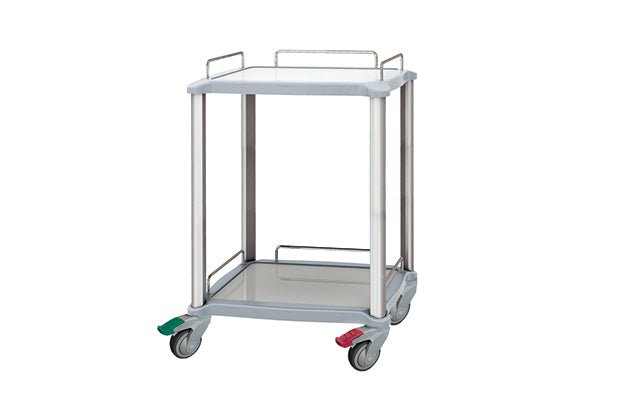
R6 Series Instrument Trolley
A mobile instrument-storage option to evaluate for durability and serviceability.
View product →
Choose durable, repairable and adaptable products using evidence that can be checked.
Discuss your requirementSustainable procurement is not a single material claim. For hospital furniture, the strongest practical levers are long service life, repairability, adaptable design, efficient logistics and responsible end-of-life planning—without compromising cleanability or safety.
Define the expected use, load, cleaning frequency and environment. Ask suppliers for construction details, warranty scope, spare-parts availability and evidence relevant to durability. A product kept in safe service longer avoids repeated replacement.
Look for replaceable castors, handles, locks, drawer slides, worktops and accessories. Modular components can support changing workflows and reduce complete-unit replacement, provided parts remain available.
Request clear material declarations and avoid vague labels. Consider recycled content, responsible sourcing, coatings, corrosion resistance, cleanability and realistic end-of-life routes together. One favourable attribute does not prove the whole product is sustainable.
Well-designed storage can improve visibility, rotation and replenishment, helping staff avoid damaged or expired stock. Choose the simplest technology that produces a verified operational benefit and account for its power, batteries and electronics.
Ask about packaging reduction, recyclable packaging, consolidated shipments, local assembly where relevant and protection against transit damage. Coordinate installation so products are not stored, moved or remade unnecessarily.
A mobile instrument-storage option to evaluate for durability and serviceability.
View product →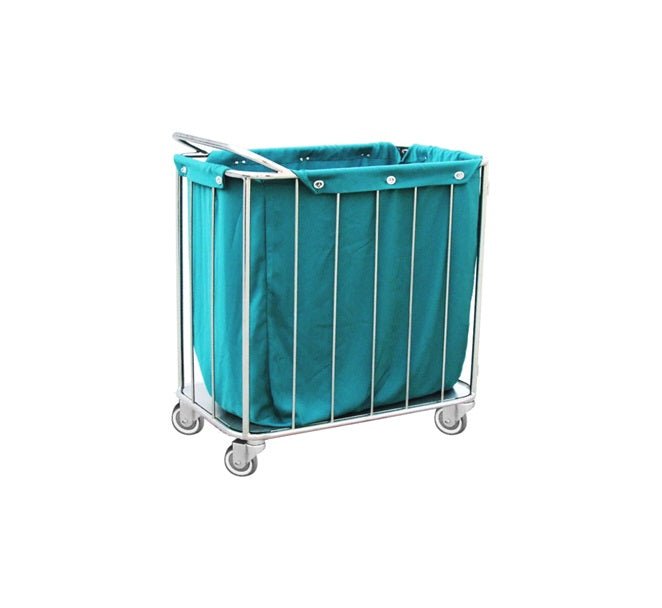
A linen-handling product for lifecycle and cleaning assessment.
View product →
Modular storage that may support future layout adaptation.
View product →Not automatically. Consider durability, repairability, amount of material, manufacturing, cleaning and the available end-of-life route.
They may be, if the finished product meets the required performance, cleanability and safety criteria. Ask for specific evidence.
It can when components are genuinely interchangeable, repairable and supported over time.
Use comparable product-level methods and boundaries. Do not compare isolated numbers prepared on different bases.
Require specific, dated, product-relevant evidence and score lifecycle performance rather than broad environmental language.
Ownership, data removal for smart products, disassembly, reuse or refurbishment options, recycling routes and responsible disposal.
Ask Rife Technologies for product-specific material, maintenance, spare-parts and packaging information for your sustainability review.
Request consultationWe are on hand to quickly give you pricing, more information, or help choose the right medical furniture, cart, cabinet, or storage solution for your requirement.