
Prepare
Load medicines and required supplies.

Compare medication trolley formats by storage, drawer organisation, mobility and the workflow used during medication rounds.

A medication cart should make each stage easier to follow and organise.
Load medicines and required supplies.
Position the trolley safely at point of care.
Use the required drawer or storage zone.
Return, organise and prepare for the next round.

Storage layout, mobility and access should be selected around the ward process and the supplies the team carries.
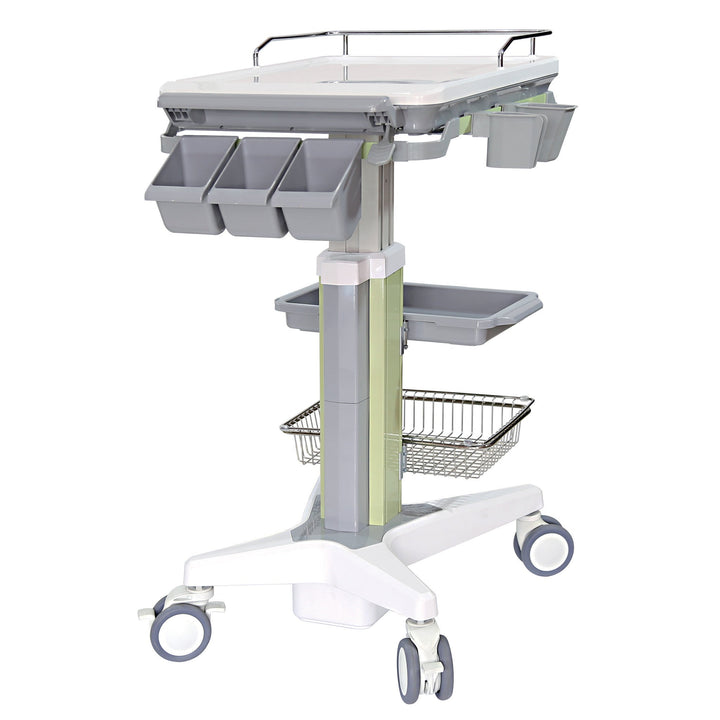
Treatment cart configured for mobile nursing workflows.
View product →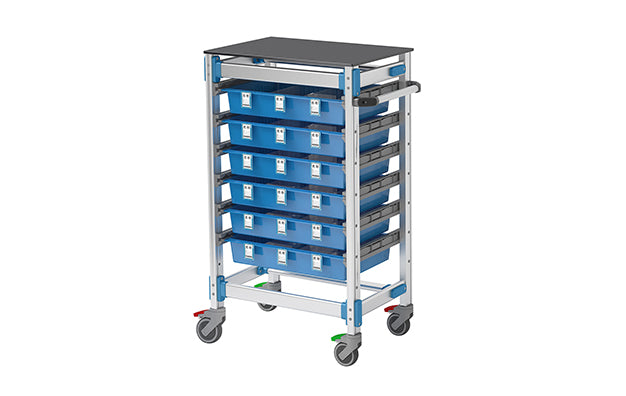
Medication trolley with organised drawer-based storage.
View product →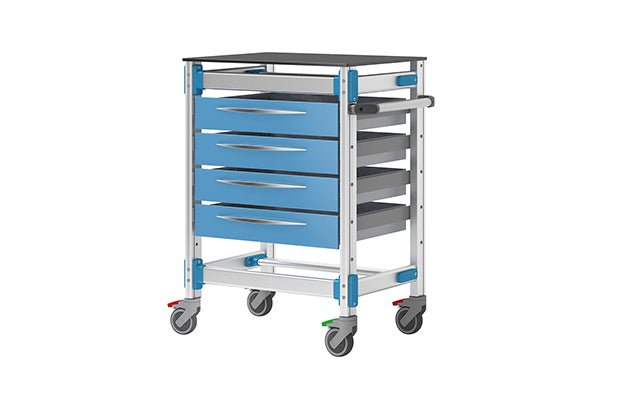
Medicine trolley for routine ward medication workflows.
View product →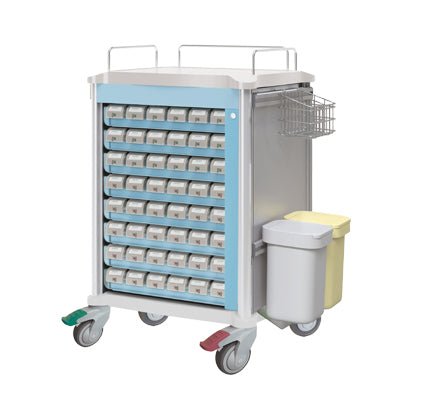
Larger medicine trolley configuration for organised storage.
View product →Select locking, storage, mobility and technology features around a safe ward medication workflow.
Discuss your requirementA medication cart should support the hospital’s approved administration process. Map preparation, patient identification, controlled-drug handling, documentation, restocking and downtime before choosing drawers or electronics.
If barcode medication administration is planned, validate patient wristbands, drug labels, scanner mounting, EMR workflow and alert ownership. The cart itself cannot guarantee the five rights without a well-designed clinical process.
Conduct a fully loaded route test. Check handle height, stability, caster braking, cleanability, cable containment and battery runtime for every installed device.
Pilot one ward, measure preparation time, scanning completion, access exceptions, battery performance and user feedback, then adjust the configuration before scaling.
Six-drawer option for nursing treatment and medication workflows.
View product →High-capacity medication-storage format.
View product →Organised ward medication trolley option.
View product →R6-series cart for ward rounds.
View product →This requires compatible software, identifiers and electronic locks. Demonstrate the entire workflow with the hospital’s systems.
Base capacity on ward census, round frequency, medication volume and replenishment policy rather than a generic drawer count.
Yes when item identity and pharmacy data support it; define offline and exception handling.
Specify low-battery warnings, charging practice, emergency access and transaction recovery.
Compare serviceability, standardisation, security, weight and replacement lifecycle.
A common platform may work with different drawer, accessory and permission configurations.
Share ward size, round process, locking, computer and accessory requirements with Rife Medical.
Request consultationWe are on hand to quickly give you pricing, more information, or help choose the right medical furniture, cart, cabinet, or storage solution for your requirement.

